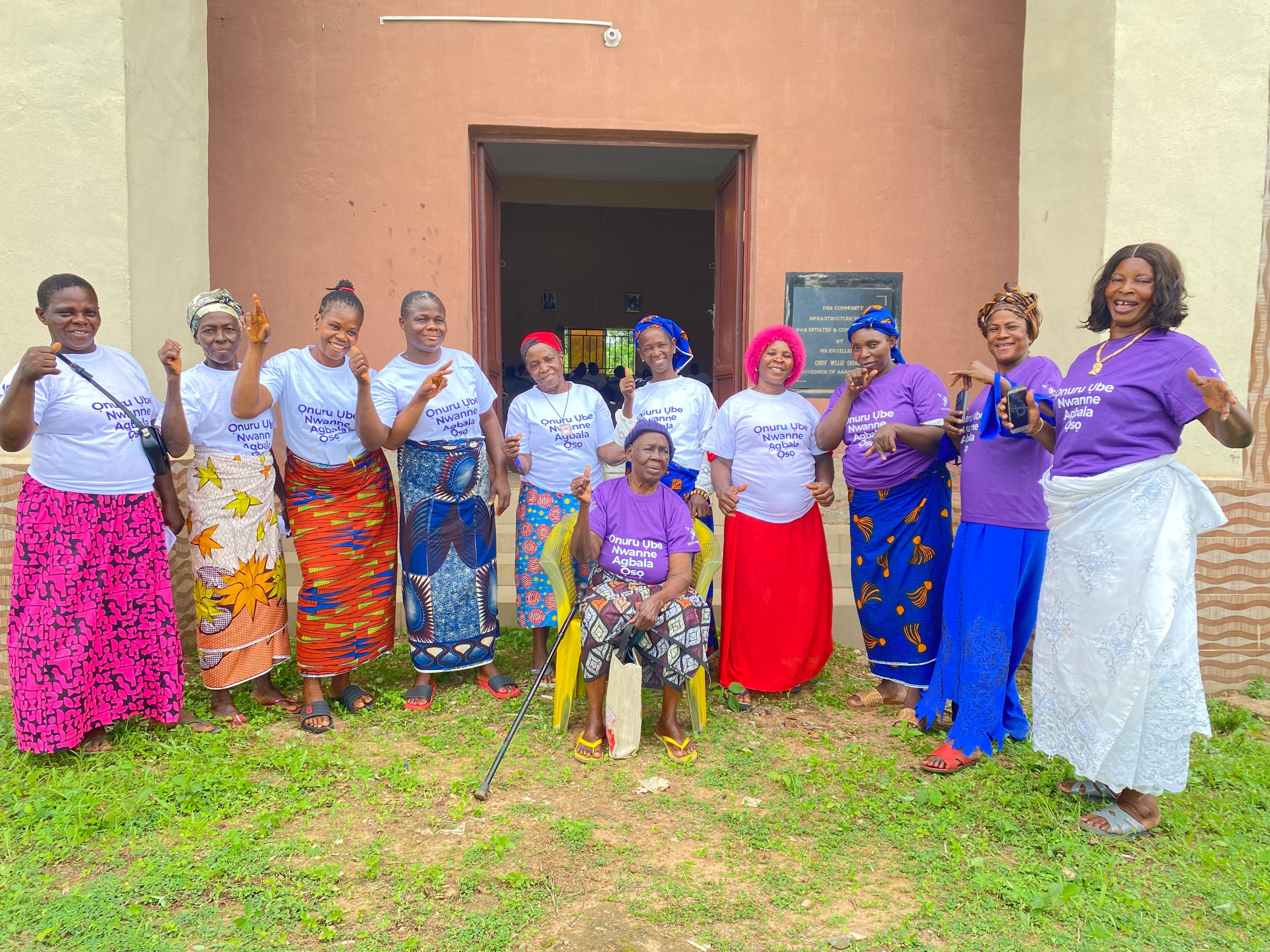
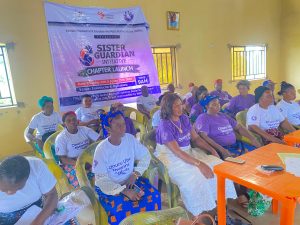
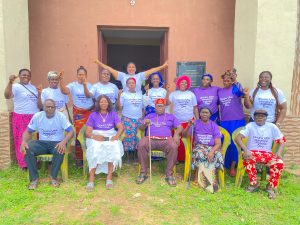
WEPBI has formally launched the Sister Guardian Initiative (SGI) chapters in Mgbakwu and Isuaniocha communities in Awka North Local Government Area of Anambra State, placing community ownership at the centre of efforts to prevent and respond to gender based violence (GBV).
Fully funded by South Saharan Social Development Organisation (SSDO), the initiative brings women leaders and key community stakeholders together to strengthen locally driven solutions, survivor support and referral pathways, and build safer communities where women and girls can live free from violence.
Gender based violence can affect far more than a woman’s immediate safety. It can undermine her dignity, confidence, economic independence and ability to participate fully in her family and community. Its consequences can also extend to children, families and the wider community.
Addressing GBV therefore requires more than intervention after violence occurs. It requires communities to recognise the realities within their own spaces, take responsibility and become active participants in creating solutions.
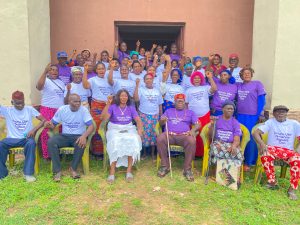
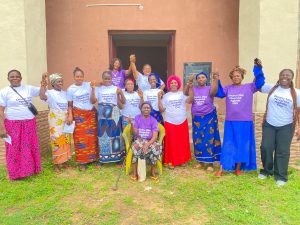
The formal launch, held on 24th and 25th September 2026, brought together influential women and key stakeholders from Mgbakwu and Isuaniocha communities, including women leaders, traditional institutions, health and education representatives and other community actors.
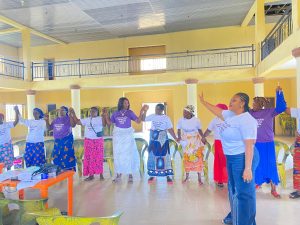
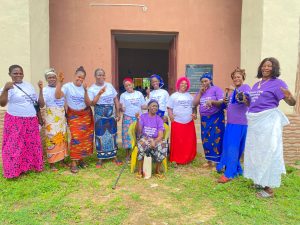
The initiative is built around the understanding that communities themselves possess valuable knowledge, relationships and structures that can contribute to preventing and responding to gender based violence. Rather than imposing solutions from outside, SGI seeks to strengthen the capacity of people within the communities to identify concerns, support survivors, make appropriate referrals and work with relevant institutions when cases require further intervention.
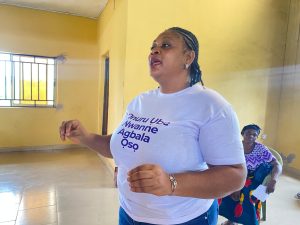
Speaking at the launch, Ijeoma Joy Oguadimma, Chief Executive Officer of WEPBI, explained that the initiative was established in response to concerns around gender based violence, the dehumanisation of women and other harmful practices affecting women within communities.
She emphasised the importance of women coming together in solidarity to contribute to creating safer communities, while also stressing that Sister Guardians are not expected to take the law into their own hands or confront perpetrators. Instead, cases requiring further intervention are to be referred to WEPBI and relevant government institutions.
The Sister Guardian Initiative therefore provides a community based structure through which women can play a more active role in prevention, support and referral while working within appropriate safeguarding and institutional mechanisms.
Speaking on the importance of community ownership, Ogechi Ewoh, Communications Officer at WEPBI, noted that the initiative is designed to enable community members to contribute to solutions that respond to the specific challenges within their communities.
She explained that people within the communities understand their social realities, cultural context and community structures, making their involvement essential to developing responses that are relevant and sustainable.
The initiative is also informed by WEPBI’s evidence based approach. Prior to the establishment of the chapters, WEPBI conducted mapping exercises, focus group discussions and community engagements in Awka North to better understand the challenges affecting women and identify areas requiring intervention.
The findings helped inform the selection of Awka North as a pilot Local Government Area for the initiative and provided a basis for developing a community focused response.
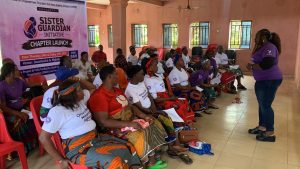
The launch also highlighted the importance of collaboration among community structures and institutions in preventing and responding to GBV. The Sister Guardian Initiative brings together women who hold different positions of influence within their communities, creating a network that can support information sharing, community mobilisation, referrals and engagement with relevant stakeholders.
In a goodwill message, Miss Eucharia Onyemaobi, Founder of Zaram Life Foundation, acknowledged the importance of strengthening community level mechanisms for preventing gender based violence and improving access to appropriate support and intervention for survivors. She encouraged members of the initiative to remain focused and committed to achieving meaningful results within their communities.
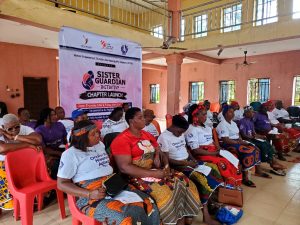

The Women President General of Isuaniocha, Mrs. Veronica Okeke, expressed appreciation to WEPBI for the initiative and expressed hope that it would help curb GBV and educate young people preparing for marriage. Representing the traditional ruler of Isuaniocha, Igwe Sylvester Ngini, Chief Damian, also acknowledged the importance of engaging women to champion the initiative and contribute to better outcomes in the community.
The inauguration marks a step towards strengthening community ownership in preventing GBV and supporting women and girls. Through the Sister Guardians, community members will work with relevant stakeholders to strengthen local responses to violence.
WEPBI calls on communities, institutions, civil society organisations and women’s rights organisations to strengthen collaboration and collective action towards building safer communities free from gender based violence.